


This week on The Run-Through, Chloe Malle and the team are celebrating the third annual launch of Dogue, Vogue’s ode to the canines we love most. Among the stories this year? A full-scale dog wedding: On August 2, at the Surrey Hotel on the Upper East Side, two Vogue staff dogs, Edie Berlinger-Douglas and Tux Murillo, said “I do” in custom Rachel Antonoff and Susan Alexandra. Elsewhere on the site, you’ll find the winner of the 2026 Dogue cover contest (an Italian greyhound named Sir Spud) and a joyous shoot with more staff dogues, featuring special collaborations with Alex Mill, J.Crew, and ceramicist Henry Holland.
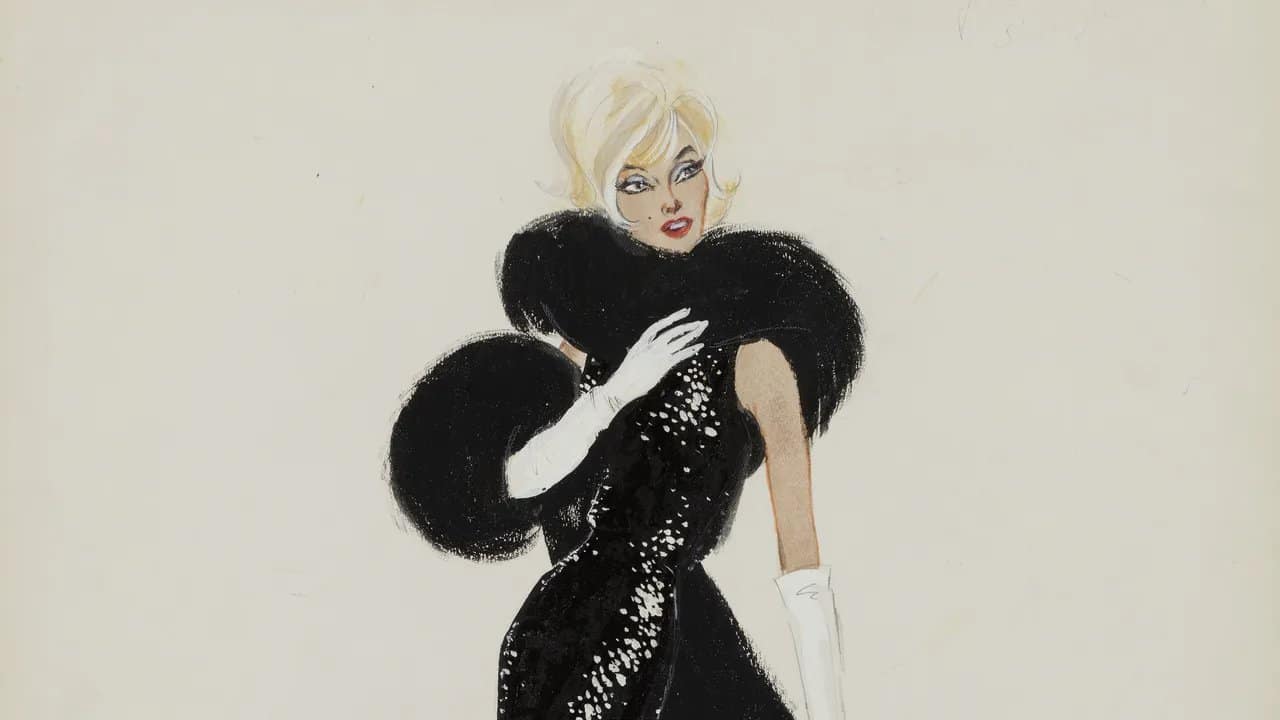
The second half of the episode offers a trip into old Hollywood, as Nicole Phelps sits down with Mauricio and Roger Padilha to discuss their new book, Jean Louis: Hollywood’s Bombshell Designer. As research, the brothers watched all 188 films that the couture-trained costume designer worked on, including 1946’s Gilda. In fact, Rita Hayworth’s strapless black satin dress in that film made such an impression that Columbia Pictures president Harry Cohn reportedly kept a rack of duplicates in Jean Louis’s studio for prospective starlets to try on. “If they did not look good in that dress, he would not hire them,” Roger Padilha reports. Of course, one of Jean Louis’s most famous creations wasn’t for a film at all, but Marilyn Monroe’s appearance at John F. Kennedy’s 45th birthday gala at Madison Square Garden, where she famously crooned “Happy Birthday, Mr. President” in 1962.
After initially proving very challenging to reach, the legendary Kim Novak—who wrote the book’s foreword—spent hours on the phone with the Padilhas, giving them a rare window into Jean Louis’s process. Her insights included an anecdote about walking in on Marlene Dietrich mid-fitting for a souffle-silk gown so sheer it required roughly 50 to 60 layers of fabric to be decent. Dietrich, the brothers say, was so exacting about the placement of every crystal that Jean Louis once snapped that the dress was starting to “look like Swiss cheese.” As for the through line in Jean Louis’s work? Roger puts it simply: “There was always a subversive edge to him.” Listen to the full episode of The Run-Through for more.