


Before she became a beloved screen actress and an Oscar nominee, Charlotte Rampling was simply a London teenager reveling in the glorious chaos of the Swinging Sixties.
She was working as a secretary, supplementing her income with occasional modeling jobs, when a casting agent spotted her. That led to a brief appearance in A Hard Day’s Night (1964), the Beatles’ first film, followed by The Knack… and How to Get It (1965), in which she appeared alongside Jane Birkin and Jacqueline Bisset. A string of successful comedies followed, as did acting classes at London’s Royal Court School, until the sudden death of her sister in 1966. Rampling subsequently decided to leave England and settle in Italy.
There, she crossed paths with Luchino Visconti, who cast her as the young wife devastated by the horrors of Nazi Germany in The Damned (1969). Drawn to roles that could not have been more different yet were united by their psychological depth, she steadily forged her path to stardom. Along the way, she ventured into science fiction with Zardoz (1974), explored sadomasochism in The Night Porter (1974), and turned to the crime genre in Farewell, My Lovely (1975). By the end of the 1970s, Charlotte Rampling had moved to France, where she worked with directors such as Yves Boisset and Jacques Deray.
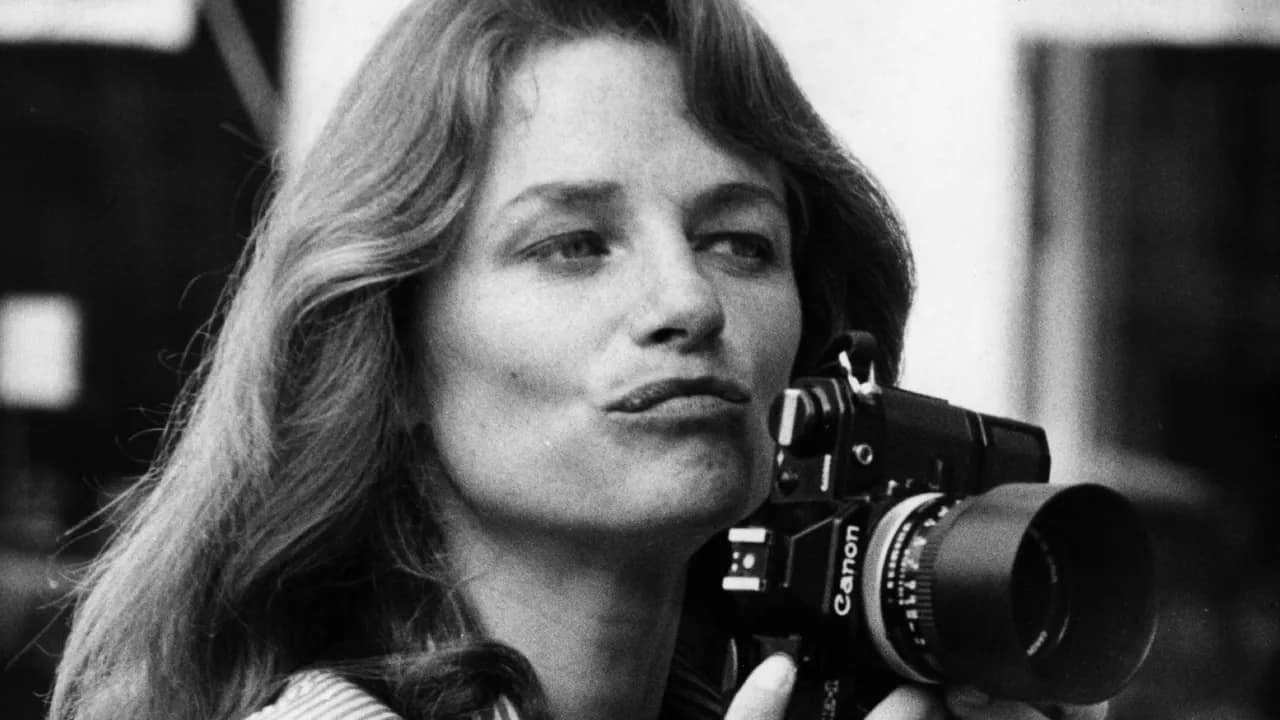
An actress with a fiercely independent spirit and striking beauty, Charlotte Rampling has always been more than a screen presence. Throughout the 1960s and 1970s in particular, she regularly stepped beyond her role as an actress to become a muse—and, at times, a photographer herself. (Her photographs were later exhibited at the Maison Européenne de la Photographie in Paris in 2012.) It was perhaps during this period that her status as an icon was truly cemented—and it remains to this day.