
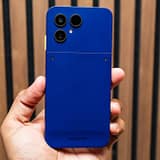




The 6.3-inch AMOLED, 120-Hz screen is more than adequate. It’s colorful, sharp, and bright enough to read in sunlight. Fairphone’s adaptive brightness mode can be a little aggressive, so I often manually adjusted the brightness slider, but I don’t have much else to complain about.
Battery life from the 4,415-mAh cell isn’t impressive, but it won’t have you running to a wall outlet all the time either. I typically ended most days with around 20 percent by bedtime; that’s with around five to six hours of screen-on time. It’s a shame there’s no wireless charging, but that’s a nice-to-have, not necessarily a deal-breaker. Oddly, the phone doesn’t come with a USB-C cable (the lack of a charging block is standard across phones these days), but the idea is that you probably have one lying around in a drawer. Less e-waste!
The dual-camera system, powered by a 50-MP main and a 13-MP ultrawide, is solid. No, Fairphone can’t really compete with the big tech giants like Google, Apple, and Samsung on this front. Low-light scenes suffer the most, with details lost in shadows—stay very still to avoid a blurry image. Photos from the 32-MP selfie camera can also look a little soft. Still, it’s not so poor that you won’t use it. You’ll get perfectly adequate results, but if you rely heavily on your smartphone’s camera for video and photos, you may want to look elsewhere.
Fairphone doesn’t meddle too much with the base Android 16 software, except for Fairphone Moments, which is tied to the yellow switch on the right edge of the phone. Flick the switch, and the phone’s interface goes minimal, only offering access to a handful of apps. You can create your own Moments—up to five apps—to help you focus on the task at hand. For example, if you’re driving, you can flick the switch and have it only let you access Google Maps, Spotify, and Phone. It’s a neat system, though its practicality completely depends on your willpower to use it.


